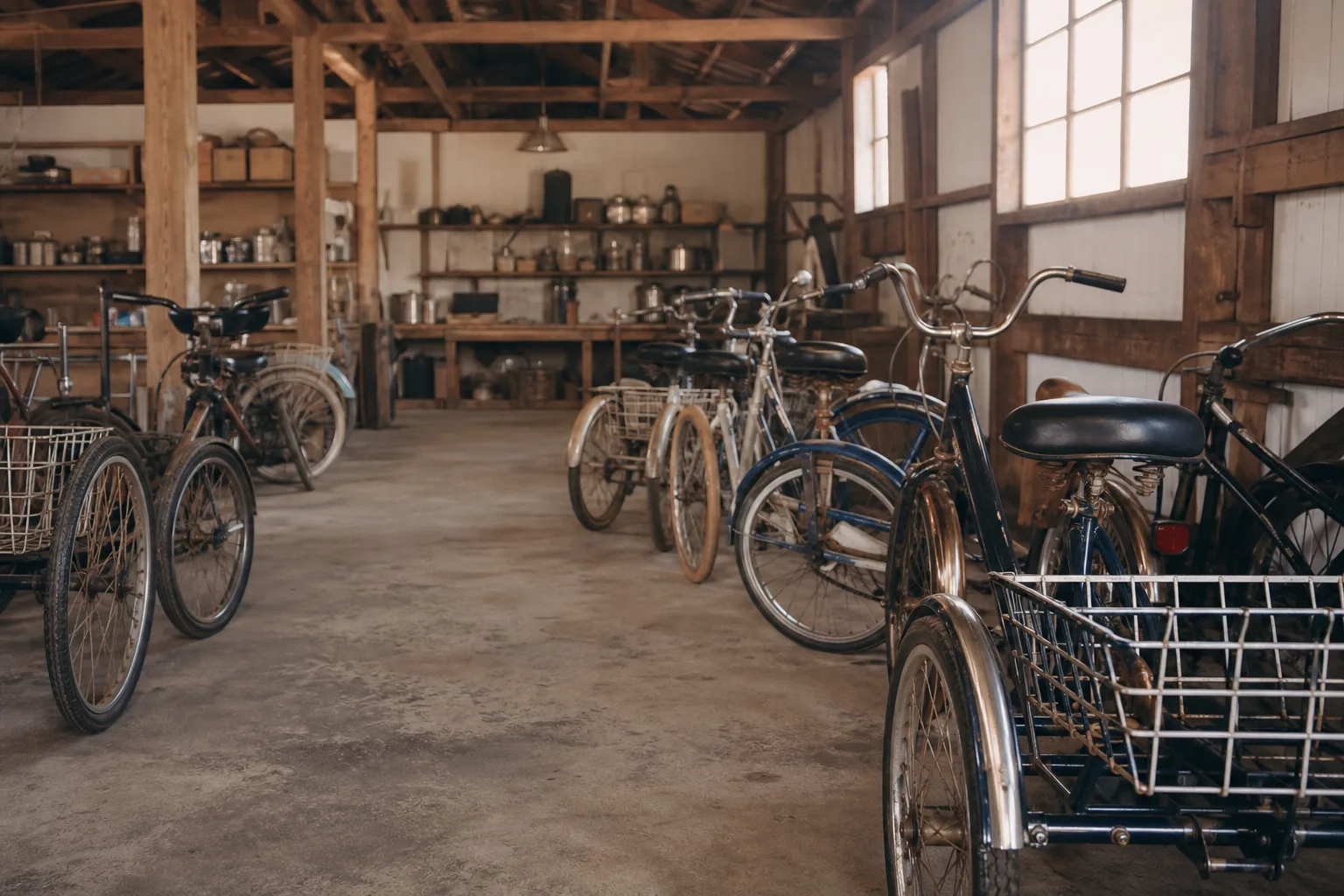
Three wheels solve the stop-and-fall problem outright, then hand you width, camber, curbs and parking in exchange. Here is who that trade actually suits.
The moment that sends most people shopping for a third wheel is not a crash. It is the stop. You roll up to a light, reach for the ground with a leg that no longer takes a sudden load, and the bike goes over slowly, sideways, in front of traffic. A trike removes that failure mode completely, and it does so on the first ride, without practice or nerve. Everything else in the decision is about what you agree to accept in return, and the sales copy is generally quiet on that half.
The three conditions a trike genuinely answers
Three specific limits make a trike the right machine rather than a compromise. The first is balance loss that is not correctable by strength, which usually means an inner-ear condition, a neurological diagnosis, or the general slowing of the righting reflex that comes with age. The second is a grip or hand problem severe enough that you cannot brake and steer at the same time, since a two-wheeler asks for both under load and a trike does not punish you for releasing one. The third is the inability to put a foot down at all, from a fused ankle, a prosthesis, or a hip that will not abduct. If one of those describes you, stop reading comparisons. A trike is the answer.
What a trike does not fix is deconditioning, mild wobble at low speed, or fear left over from a fall on a bike that was too tall. Those respond to a lower frame, a shorter reach, and fatter tires, and riders who buy three wheels for them often find the machine heavier and duller than the problem warranted. The Consumer Product Safety Commission oversees the safety requirements that apply to bicycles and adult tricycles sold in the United States, and both categories sit inside that scope, so the choice is not a regulatory one. It is a fit question, and the honest version of it starts with what your body actually refuses to do.
Width is the cost you pay every single ride
Two wheels occupy the width of your handlebars. Three occupy roughly thirty to thirty-four inches at the rear axle on most delta trikes, and that number is the one that decides whether a route stays open to you. Bollards, chicanes on rail trails, the gap between a parked car and a curb, the gate at the end of the alley: each is a pass-fail test you take at walking speed, and failing one means backing a machine that does not reverse politely. Measure the tightest pinch point on the route you ride most, before ordering, because that measurement is more predictive of your satisfaction than motor wattage.
Camber is the second daily tax. Roads are crowned to shed water, sidewalks tip toward the gutter, and a two-wheeler absorbs all of that by leaning imperceptibly. A trike cannot lean, so a cross-slope becomes a constant steering input pulling you downhill, tiring on the arms and genuinely unnerving on a driveway apron that drops four inches over three feet. Riders adapt within a few weeks. Nobody warns them beforehand.
Where a low-step two-wheeler or a recumbent wins
A low-step frame with a step-over height under about fifteen inches solves mounting, which is a different problem from balancing, and it keeps every advantage two wheels have: narrow, leanable, storable on end, liftable into a truck bed by one person. Add a mid-drive motor and a rider who can still balance at four miles an hour gets stability from speed rather than from geometry. A recumbent trike, meanwhile, suits the rider whose limit is spinal or shoulder rather than balance, since the seat carries the load and the hands do almost nothing. It is also the least practical of the three to park, load, or ride in traffic where drivers expect a head at car-window height.
Electric assist changes the math on all of them, and it changes it most on three wheels, because a trike weighs enough that hills without a motor are punishing. Anyone comparing a 3 wheel electric bike against an unpowered one should treat the assist as structural rather than optional, since the added seventy to ninety pounds of frame, battery and rear axle has to be moved by legs that are already the reason for the purchase.
Curbs, parking and the storage arithmetic
You cannot hop a curb on a trike, or bump-lift the front wheel over a lip, so every driveway entrance and every crossing has to have a curb cut you can reach at an angle wide enough for the rear track. That reshapes routes in ways worth scouting before purchase. Parking is the other reshaping: a trike does not fit a standard bike rack, does not stand against a wall, does not go up interior stairs, and will not hang from a garage hook. It needs a flat footprint roughly the size of a large armchair, ideally sheltered and at ground level, with a ramp or level threshold to reach it. Sort out that spot first, then buy.
The trade that works is straightforward once it is named: you give up narrow gaps, curb-hopping and easy storage, and you get back the ability to stop anywhere without consequence. For a rider whose legs will not catch a falling bike, that is not a compromise at all. It is the whole point, and every other cost is arithmetic you can do in an afternoon with a tape measure and a walk down your own street.