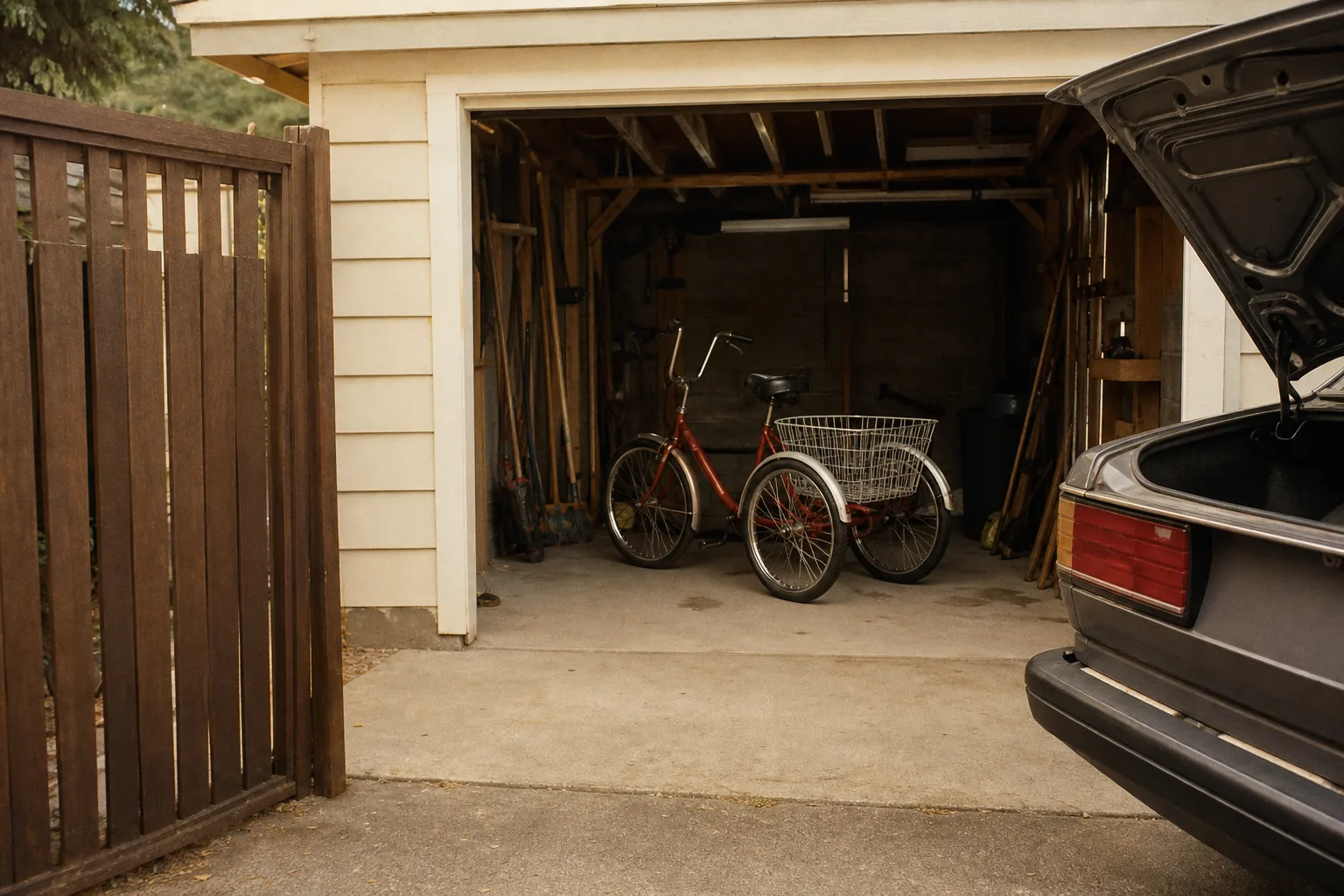
The dimension that decides whether an adult trike works at your address is almost never the one printed largest on the product page. Sellers lead with seat height, motor wattage and battery range, because those numbers sell. Width and length sell nothing, so they sit in a specification table three scrolls down, sometimes rounded, sometimes measured at the axle rather than at the widest point of the rear fenders. A careful reader treats those figures as a starting estimate and then goes out to the garage with a tape measure and a piece of cardboard cut to size.
1. The narrowest point on the route, not the doorway
Most adult trikes run somewhere in the high twenties to mid thirties in inches across the rear axle, and the fenders or a rear basket usually add to that. A standard interior door slab is often thirty or thirty-two inches, but the clear opening is smaller once the stop molding and the hinged door itself are in the way. Side gates are worse and rarely standard at all. Walk the whole route from the street to where the trike will sleep, measure every pinch point, and write down the smallest one, because that is the number that governs.
2. Length, turning circle and the shed you already own
Length matters less for getting through openings and more for what happens once the trike is inside. Many models run past six feet nose to tail, which is longer than a garden shed is deep, and a trike cannot be shuffled sideways the way a two-wheeler can be walked on its rear tire. The turning circle in a garage is the real constraint. Cut cardboard to the published footprint, lay it on the floor where the trike will live, and try walking around it with a laundry basket before committing.
3. What a folding trike costs you in pounds
Folding solves the trunk problem and creates a lifting problem. The hinge, its clamp and the reinforced tubing around it all add material, so a folding trike generally weighs more than the equivalent rigid frame, not less, and adding a mid-drive motor and a battery pushes many complete machines well past what one person can deadlift into a hatchback. Folded, a trike still occupies a substantial block rather than collapsing flat. Before you order, measure your own trunk opening at its narrowest, which is usually the lip, not the widest span of the hatch.
4. Tires, batteries and the rest of the running bill
Three tires cost more than two, and rear trike tires wear faster than most riders expect because a trike does not lean, so the rubber scrubs sideways through every turn. Budget for rear pairs more often than fronts. The battery is the larger line item and the one with a clock on it: lithium packs lose capacity with cycles and with age regardless of use, and a replacement pack is typically a meaningful fraction of what the whole machine cost. Ask, in writing, whether that specific pack will still be available in five years.
5. A shop that will actually put it on a stand
Call two local shops before you buy, name the exact model, and ask whether they will service it. Many repair stands grip a seat tube or a top tube and simply will not hold a trike, so the work happens on the floor, takes longer and gets billed accordingly. Ask about the rear axle specifically, since differentials and single-side drives are where trike repairs get specialized. The Consumer Product Safety Commission is responsible for safety requirements covering bicycles sold in the United States, which is worth knowing when you compare a mainstream brand against a direct import.
The buyers who end up happiest are the ones who did the boring part first: a tape measure, a cardboard cutout on the garage floor, two phone calls to shops, and one honest look at whether anyone in the house can lift sixty-odd pounds into a car. Those four checks take an afternoon and they eliminate most of the returns.