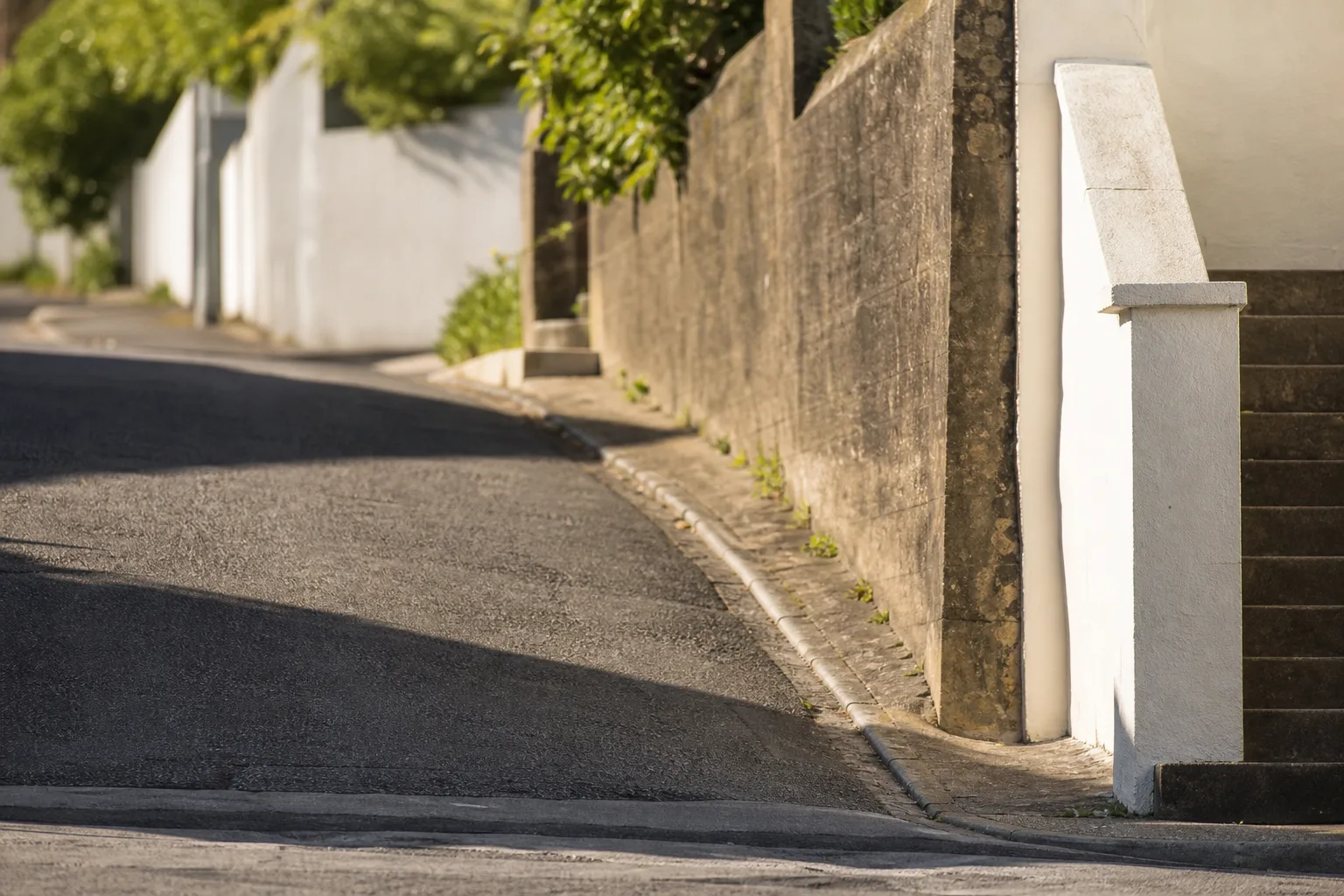
The hill that matters is not the one on the brochure's test route, it is the one between the corner store and your own driveway, and almost nobody measures it before they buy. Sales conversations run on adjectives: strong climber, plenty of torque, handles hills with ease. None of that survives contact with a two-block ramp at nine percent with a rider, a battery, groceries and forty-something pounds of trike frame all pushing back down it. The useful work takes an afternoon and costs nothing, and it changes which machine you should be looking at.
Getting an actual number for the grade
Grade is rise over run expressed as a percentage, so a road that climbs six feet over a hundred feet of horizontal distance is a six percent grade. A phone's built-in level app, laid flat on a stiff board on the pavement, gives a workable reading in degrees that you can multiply by roughly 1.75 to get percent for anything under fifteen degrees. Better still, walk the hill in three or four segments, because most residential climbs have one nasty pitch buried inside a gentle average. That short pitch is the one that stalls motors, and it is the number worth writing down.
Length matters as much as steepness, and the two fail in different ways. A twelve percent kick lasting sixty feet is a momentum problem: you carry speed into it and you are over the top before anything overheats. A five percent grade running half a mile is a thermal and battery problem, where a hub motor spinning slowly under continuous load sheds heat poorly and the controller may quietly reduce power to protect itself. Measure both, in feet and in percent, and bring those two figures to every conversation with a dealer.
Hub motor or mid-drive, judged against your own numbers
A rear hub motor is geared once, permanently, through the wheel it sits in. It is quiet, cheap to live with, and unbothered by chain wear, and on grades up to roughly five or six percent with a moderate load it does honest work. What it cannot do is downshift. When speed falls below the range the motor was wound for, current climbs, heat builds and thrust falls off, which is why hub-driven trikes so often feel strong for the first block of a long climb and tired by the third. A mid-drive turns the same chain and cassette the rider does, so every low gear you fit is a low gear the motor also gets to use.
That is the trade, stated plainly. Mid-drives climb sustained steep grades better and cost more, both to buy and to maintain, since the chain and sprockets absorb motor torque as well as leg torque. Hub motors are simpler, and on a trike with a wide-range cassette they are perfectly adequate for rolling terrain. The decision follows the measurement: if your worst pitch is short, a hub drive on a well-geared trike will serve; if you face a long grinding grade every time you come home, the mid-drive earns its price.
Why the low gears still matter after the motor arrives
Assist does not remove the need for a granny gear, it changes who benefits from it. Most systems in the United States cut power at twenty miles per hour or below, and all of them are cadence-sensitive in the sense that your legs still have to turn comfortably for the sensor to give you what you paid for. Riders with knee or hip limits usually need to spin, not push, and a cassette that bottoms out too high forces exactly the slow heavy pedal stroke that hurts. Ask for the smallest chainring and the largest rear cog by tooth count, not for reassurance.
Three wheels, and the braking arithmetic nobody mentions
Coming down is the part that catches people out. A trike does not weight-shift the way a bicycle does, so front brake bias behaves differently, and braking hard on one front wheel of a tadpole layout will pull the machine toward that side. Drum or disc brakes with a matched pair up front, plus a genuine parking brake you can set with one hand on a slope, are worth more than any motor spec. The Consumer Product Safety Commission oversees safety requirements for bicycles sold here, and brake performance sits squarely inside that remit. Test the descent, loaded, before you sign anything.
Take the two numbers, worst pitch and total length, to the dealer and make them answer in gear inches and brake type rather than in adjectives. A shop that can do that arithmetic in front of you is usually a shop worth buying from.